
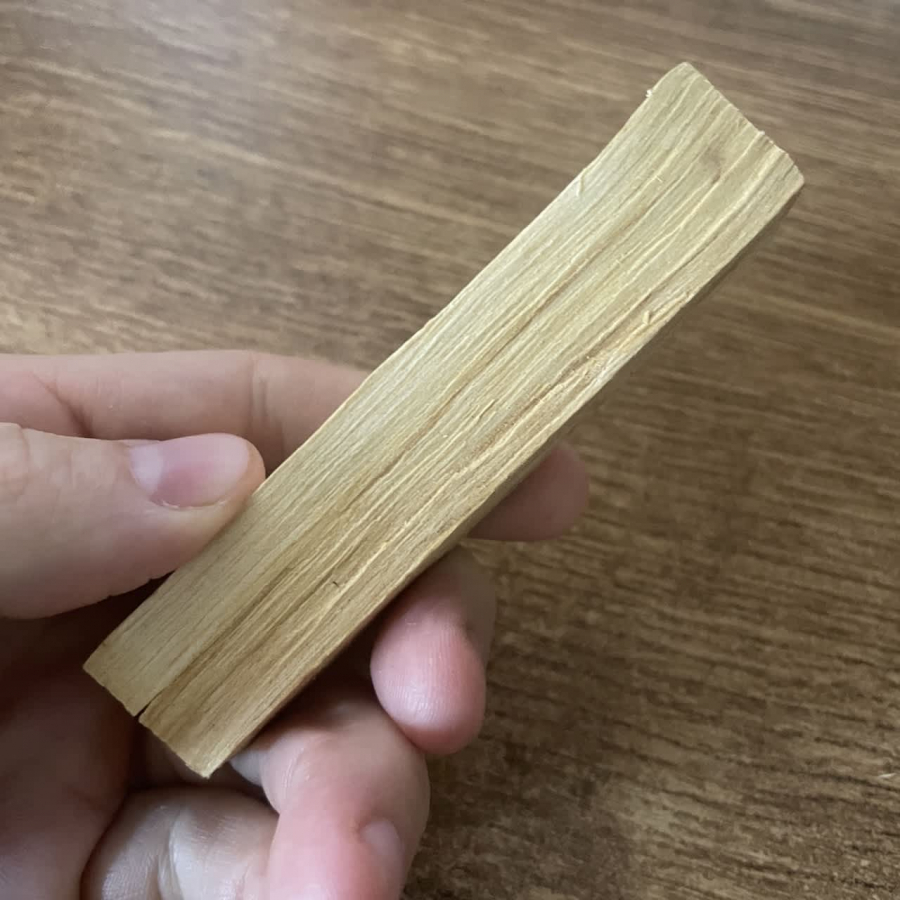
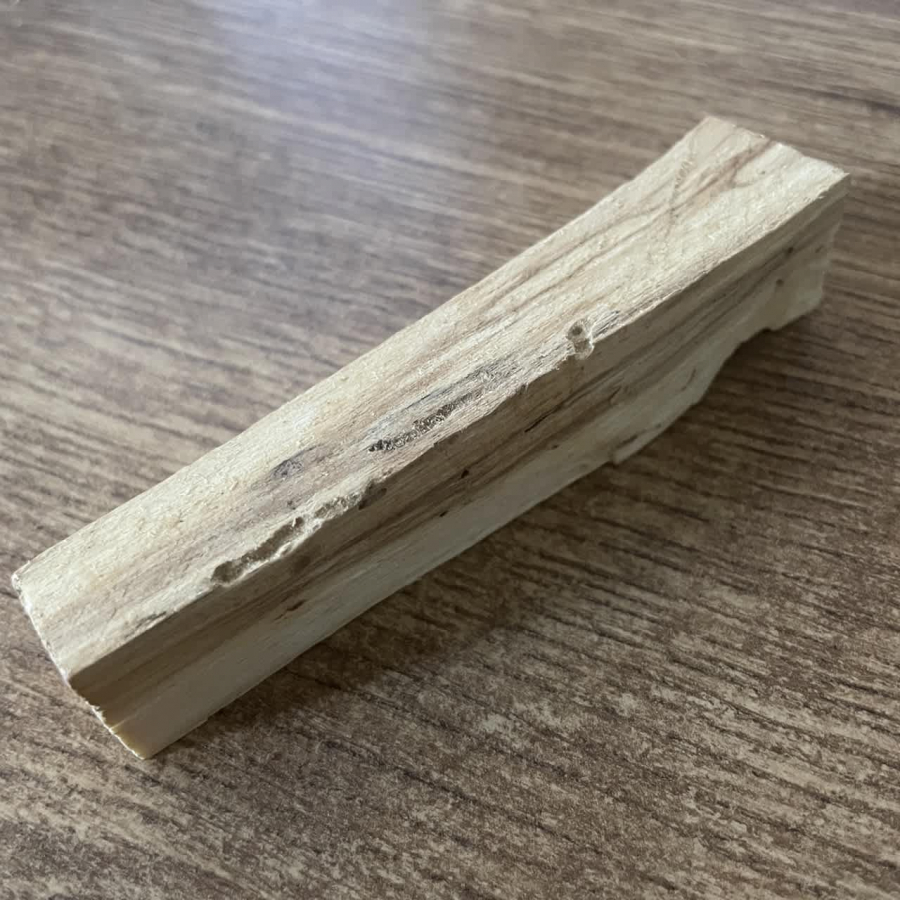
Palo Santo Incense Wood
Weight: 15 g
Country Peru
Size: 10cm
Palo Santo – sacred wood from Peru
Palo Santo is an aromatic tree that grows in the dry forests along the coast of South America. It belongs to the Burseraceae family – like frankincense, myrrh and copal – and has been used since time immemorial in cleansing rituals for spaces.
When the Spanish arrived on the new continent, they named it “Palo Santo” – holy wood. Its sweet, resinous scent with a citrus note still accompanies meditation, contemplation and everyday rituals.

Intentions
Cleansing
Ceremonial
Protection
These are traditional and symbolic associations, not guaranteed effects.
Wood that has to mature
To keep its scent, Palo Santo wood is harvested only after the tree has died naturally. It then stays in place for five to eight years until the oils in the heartwood have matured.
The scent of Palo Santo

The Bursera graveolens tree
Palo Santo grows mainly in the dry forests of Peru and Ecuador and is also found in the Galápagos, Mexico and Cuba. In good conditions it reaches a height of up to 18 metres, with a crown of up to 12 metres and a trunk up to 80 cm in diameter. It naturally lives 50 to 70 years.
It flowers in May and June, bears fruit from mid-June to July and sheds all its leaves at the end of summer.
Smudging across cultures
Almost all ancient cultures knew smudging – from the biblical story of the Three Kings who brought frankincense and myrrh, to the Babylonians and Egyptians, for whom the scent of smoke was part of offering and ritual. Palo Santo belongs to the same plant family and, unlike resins, you only need to light a piece of wood.
How Palo Santo is traditionally lit

Pack sizes
Safety
FAQ
What is Palo Santo? +
Why is it called “holy wood”? +
How is Palo Santo harvested? +
How Palo Santo is traditionally lit? +
What is the difference between a stick and sahumerio? +
How much does shipping cost? +
You might also like
Here you can add your experience with the product or a comment:
Palo Santo – sacred wood from Peru
Palo Santo is an aromatic tree that grows in the dry forests along the coast of South America. It belongs to the Burseraceae family – like frankincense, myrrh and copal – and has been used since time immemorial in cleansing rituals for spaces.
When the Spanish arrived on the new continent, they named it “Palo Santo” – holy wood. Its sweet, resinous scent with a citrus note still accompanies meditation, contemplation and everyday rituals.
Intentions
Cleansing
Ceremonial
Protection
These are traditional and symbolic associations, not guaranteed effects.
Wood that has to mature
To keep its scent, Palo Santo wood is harvested only after the tree has died naturally. It then stays in place for five to eight years until the oils in the heartwood have matured.
The scent of Palo Santo
The Bursera graveolens tree
Palo Santo grows mainly in the dry forests of Peru and Ecuador and is also found in the Galápagos, Mexico and Cuba. In good conditions it reaches a height of up to 18 metres, with a crown of up to 12 metres and a trunk up to 80 cm in diameter. It naturally lives 50 to 70 years.
It flowers in May and June, bears fruit from mid-June to July and sheds all its leaves at the end of summer.
Smudging across cultures
Almost all ancient cultures knew smudging – from the biblical story of the Three Kings who brought frankincense and myrrh, to the Babylonians and Egyptians, for whom the scent of smoke was part of offering and ritual. Palo Santo belongs to the same plant family and, unlike resins, you only need to light a piece of wood.
How Palo Santo is traditionally lit