
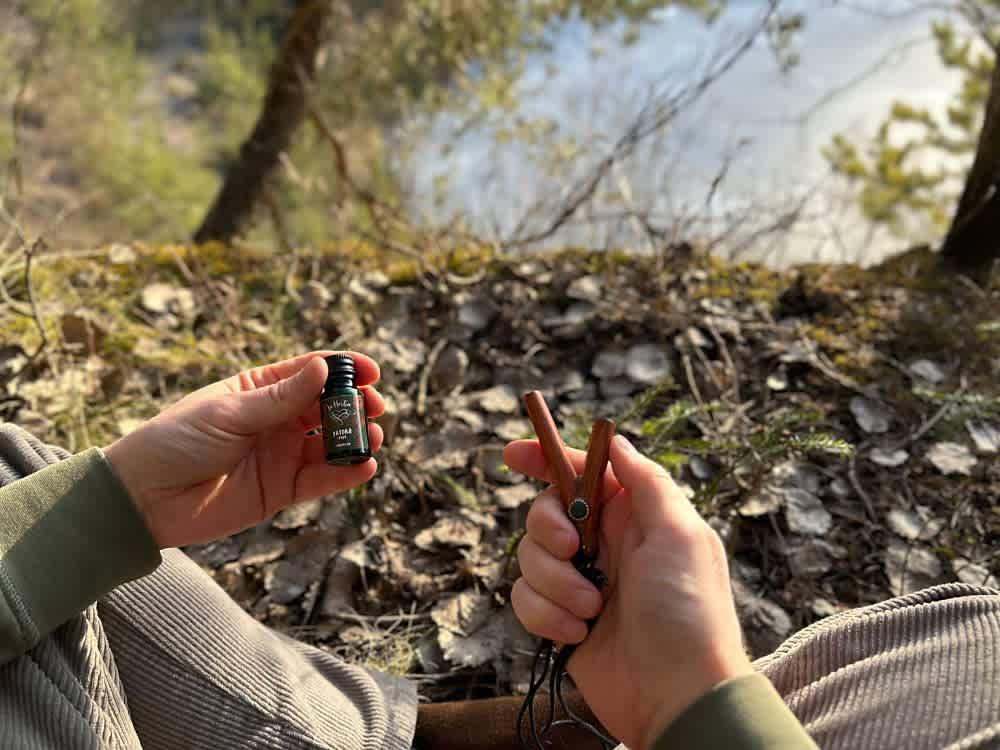
What Is Rapé (Hapé)? The Complete Guide to Amazonian Sacred Snuff
Chapter 1 – What Is Rapé?
Rapé (pronounced ha-PAY), also commonly written as Hapé, is a traditional Amazonian herbal snuff that has been used by Indigenous tribes for centuries as part of ceremonial, spiritual and daily practices. Unlike commercial snuff or recreational tobacco products, Rapé is prepared according to ancestral knowledge passed down through generations and holds deep cultural significance for many Indigenous communities of the Amazon rainforest.
At its core, Rapé is a finely sifted blend of Mapacho (Nicotiana rustica) and the sacred ash of selected medicinal trees. Depending on the tribe and the specific recipe, additional Amazonian plants, seeds, leaves or aromatic herbs may be included. Each blend has its own unique character and is traditionally crafted with a specific intention in mind.
Rather than being viewed simply as a substance, Rapé is traditionally regarded as a sacred ceremonial tool. Indigenous peoples use it to support presence, prayer, meditation, concentration and connection with nature, community and tradition. The experience can vary greatly depending on the blend, the intention behind its use and the individual.
Rapé or Hapé – Which Spelling Is Correct?
You may encounter several spellings, including Rapé, Hapé, Rapeh or Hapeh.
These variations exist because many Indigenous Amazonian languages do not have a standardized written form, and Portuguese, Spanish and English each represent pronunciation differently.
- Rapé is the original Portuguese spelling and is widely used in Brazil.
- Hapé reflects the pronunciation used by many Indigenous tribes, where the letter R is spoken more like an H.
- Rapeh and Hapeh are alternative spellings that have become common in English-speaking communities.
Although the spelling varies, they all refer to the same traditional Amazonian preparation.
What Is Rapé Made Of?
Traditional Rapé recipes differ from tribe to tribe, but most blends are based on two essential ingredients:
Mapacho (Nicotiana rustica)
Mapacho is a traditional Amazonian tobacco that differs significantly from commercial cigarette tobacco (Nicotiana tabacum). Indigenous communities have cultivated and used it for generations in ceremonial contexts. Within these traditions, it is valued for its cultural and spiritual significance rather than for recreational use.
Sacred Tree Ash
The second essential component is ash produced from carefully selected Amazonian trees. Different trees contribute different characteristics to the blend.
Some of the best-known include:
- Tsunu
- Murici
- Pau Pereira
- Caneleiro
- Cumaru
- Paricá
- Imburana
The choice of ash is one of the main reasons why different Rapé blends are traditionally associated with different energetic qualities.
Many recipes also include additional forest plants, seeds, bark or leaves that reflect the traditions of a particular tribe.
More Than a Blend of Plants
One of the most common misconceptions is that Rapé is simply "powdered tobacco."
For Indigenous peoples, this is far from accurate.
Traditionally, Rapé is prepared with great care and respect. The selection of plants, the preparation process and the ceremonial context are considered just as important as the ingredients themselves. Many tribes view the preparation of Rapé as a practice that requires knowledge, patience and responsibility.
This cultural perspective is one of the reasons why authentic Rapé differs so significantly from commercial nasal snuffs.
Every Blend Has Its Own Character
Not all Rapé is intended for the same purpose.
Some blends are traditionally appreciated for helping create a sense of grounding and stability, while others are more commonly chosen for meditation, quiet reflection or ceremonial practice. Certain recipes are known for their invigorating and focused character, whereas others are valued for their gentle, heart-centred nature.
Because of this diversity, choosing a blend is often less about finding the "strongest" Rapé and more about finding one that aligns with your intention.
At La Herba, we organise our blends using a simple 7 Intentions system to make this process easier for beginners and experienced practitioners alike.
In the next chapter, we'll explore where Rapé comes from, how it became an integral part of Amazonian Indigenous traditions, and why it continues to hold cultural and ceremonial significance today.
What Is Rapé (Hapé)? The Complete Guide to Amazonian Sacred Snuff
Chapter 1 – What Is Rapé?
Rapé (pronounced ha-PAY), also commonly written as Hapé, is a traditional Amazonian herbal snuff that has been used by Indigenous tribes for centuries as part of cerem...
Rapé: A Gateway to Inner Clarity and Alignment
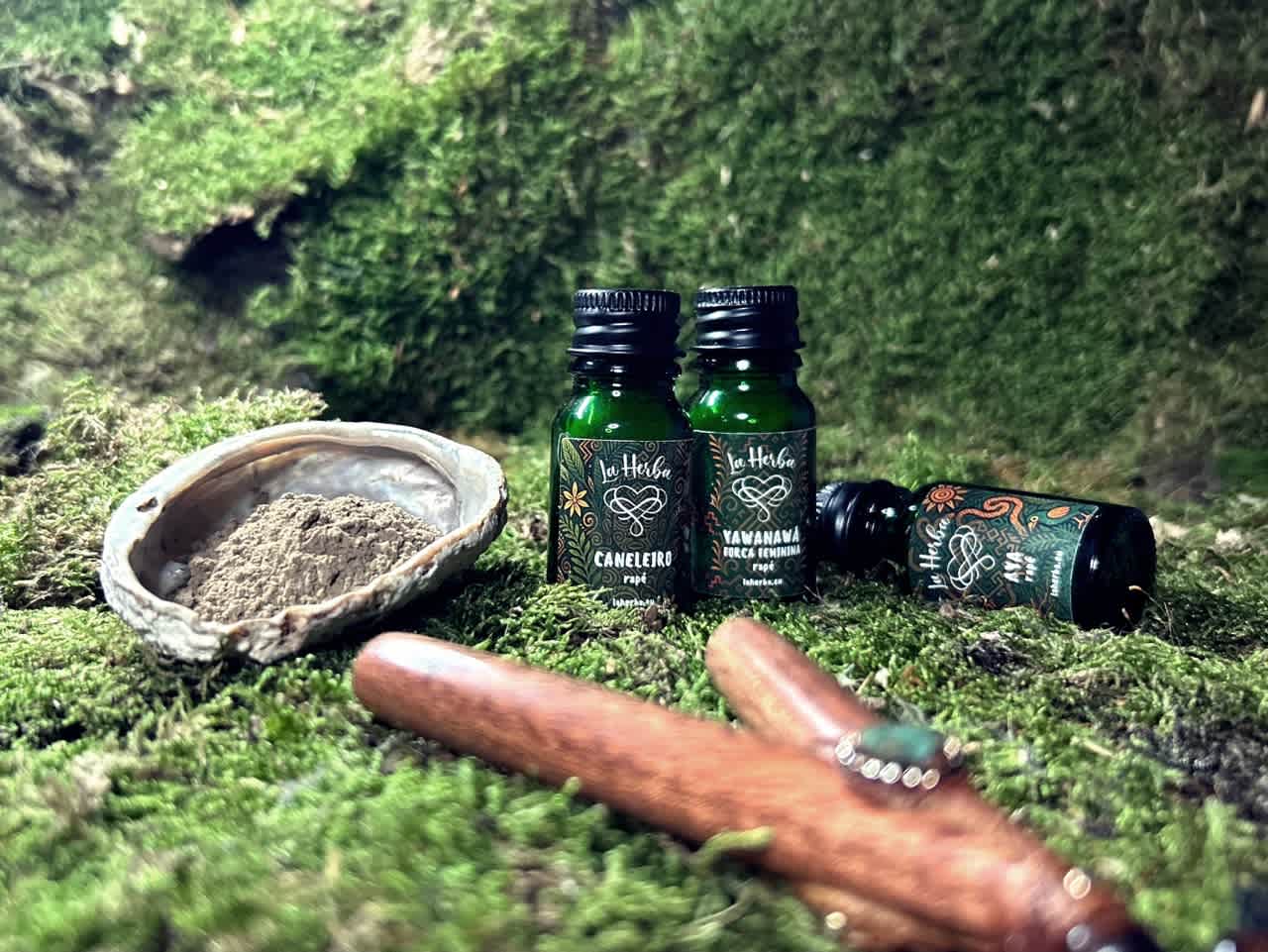
Rapé (pronounced ha-peh) is far more than a botanical blend; it is a sacred tool from the heart of the Amazon. For centuries, it has served as a bridge between the physical and the subtle, acting ...
The Puyanawa tribe
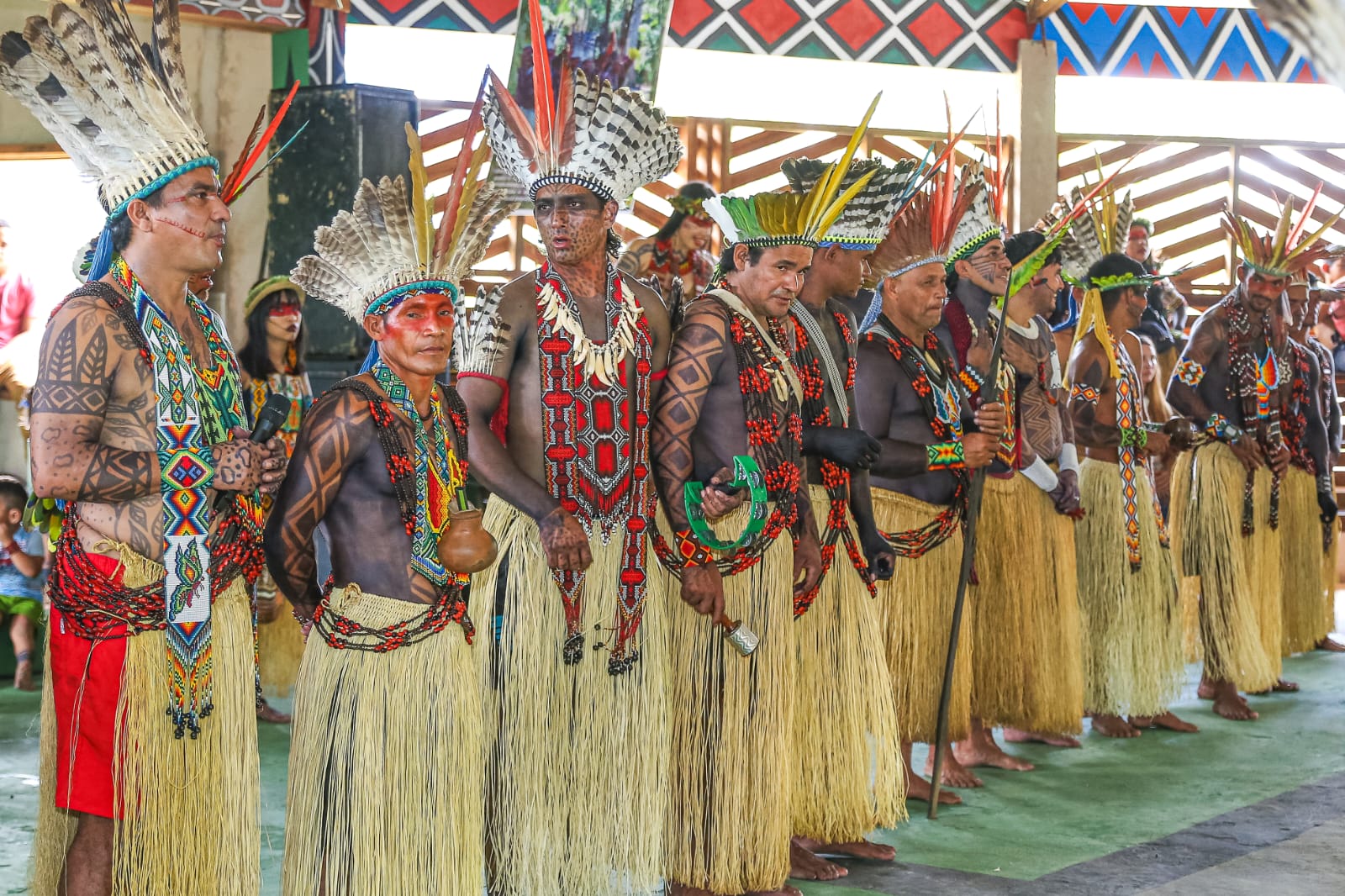
The Poianauas (Puyanawa) are an indigenous group that lives in the far west of the Brazilian state of Acre, more precisely in the Indigenous Land Poyanawa, located in the municipality of Mancio Lim...
Rapé Intentions: Cleansing, Grounding, Ceremonial ...
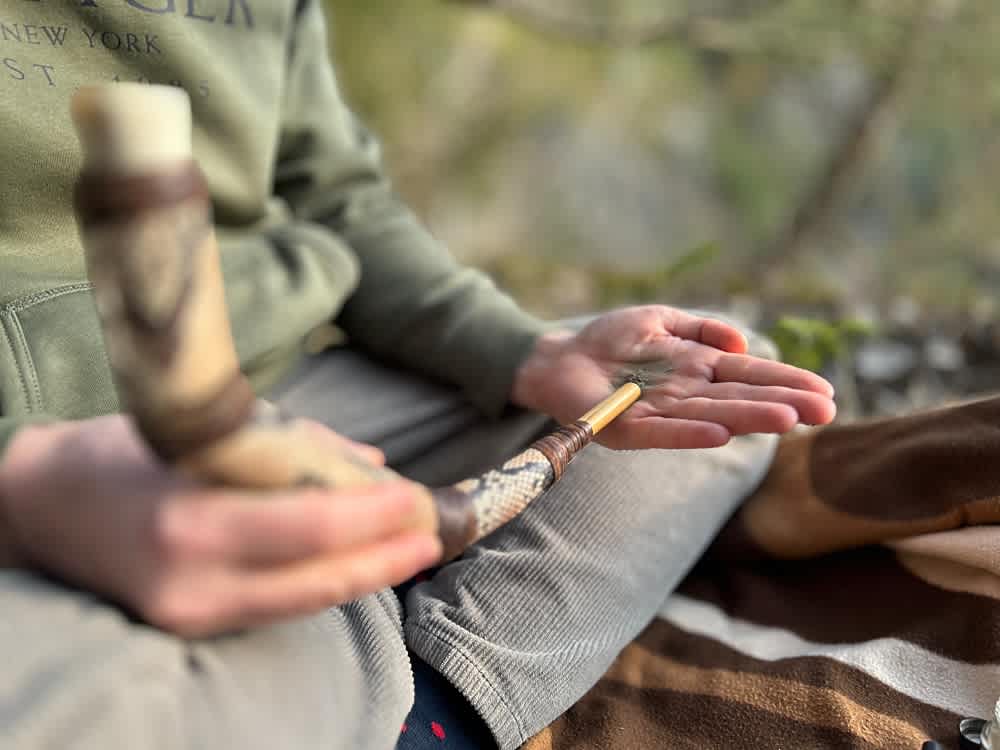
Most Rapé falls loosely into three families, and they map onto how the tradition itself talks about it. The lines aren't rigid — blend, setting and intention shape everything — but the grouping hel...