
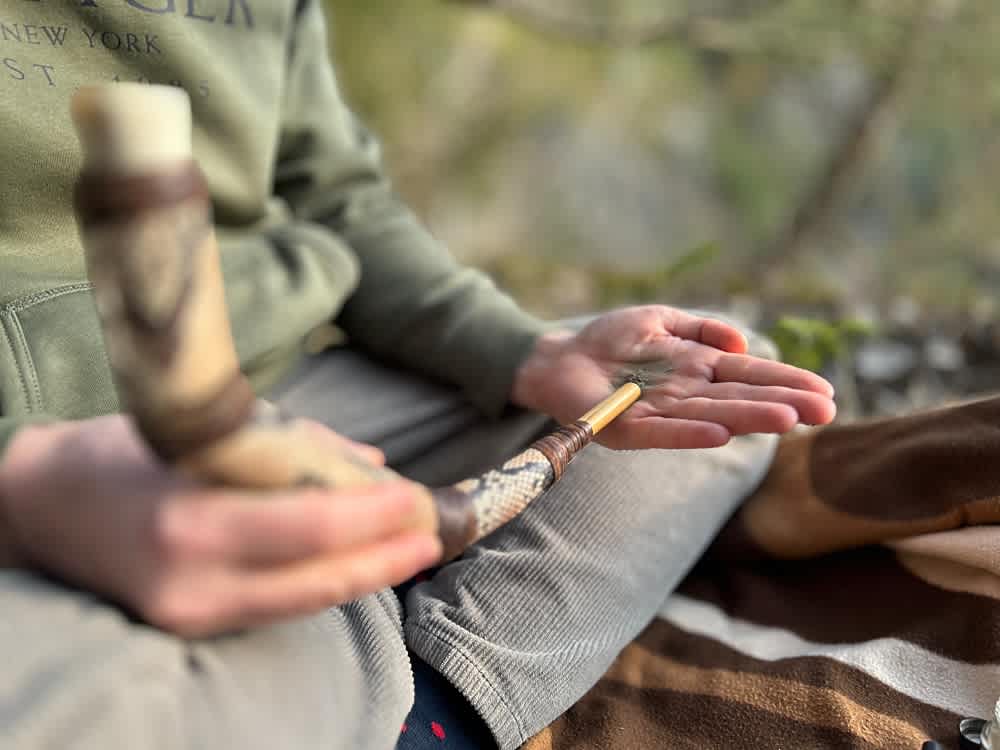
Rapé Intentions, Effects & Types Explained
Most Rapé falls loosely into three families, and they map onto how the tradition itself talks about it. The lines aren't rigid — blend, setting and intention shape everything — but the grouping helps when you're choosing. Read it as how practitioners describe each type, not as a promise of what it will do for you.
Grounding (fortifying) Rapé - energy, focus
The everyday family — soft blends, often built on light Tsunu or Murici ash. Practitioners reach for these for a quick sense of mental clarity and present-moment focus, a settling of mental noise rather than anything dramatic. Most people describe a brief nasal tingling and a subtle lift in alertness, commonly attributed to nicotine crossing the nasal mucosa. This is where most newcomers start.
Typical blends:
- Cumaru Rapé
- Jatobá Rapé
- Canela de Velho Rapé
- Mulateiro Rapé
- Pau Pereira Rapé
- Paricá Rapé
- Anador Chambá Rapé
Ceremonial (spiritual) Rapé - spiritual, visions
The communal family — the Rapé that belongs to prayer, song and gathering rather than to a quiet morning alone. In the western Amazon these blends accompany uni (Ayahuasca) and mariri (ceremonial song), and practitioners describe a grounded sense of connection: to themselves, to the circle around them, and to ancestral lineage. In communal settings Rapé carries the passing-on of teachings as much as anything else. Worth repeating: even here, it isn't psychoactive in the visionary sense.
Typical blends:
- Aya Caapi Cipó Rapé
- Mariri Rapé
- Jurema Branca Rapé
- Samaumá Rapé
- Veia de Pajé Rapé
- Chacrona Rapé
- Jurema Preta Rapé
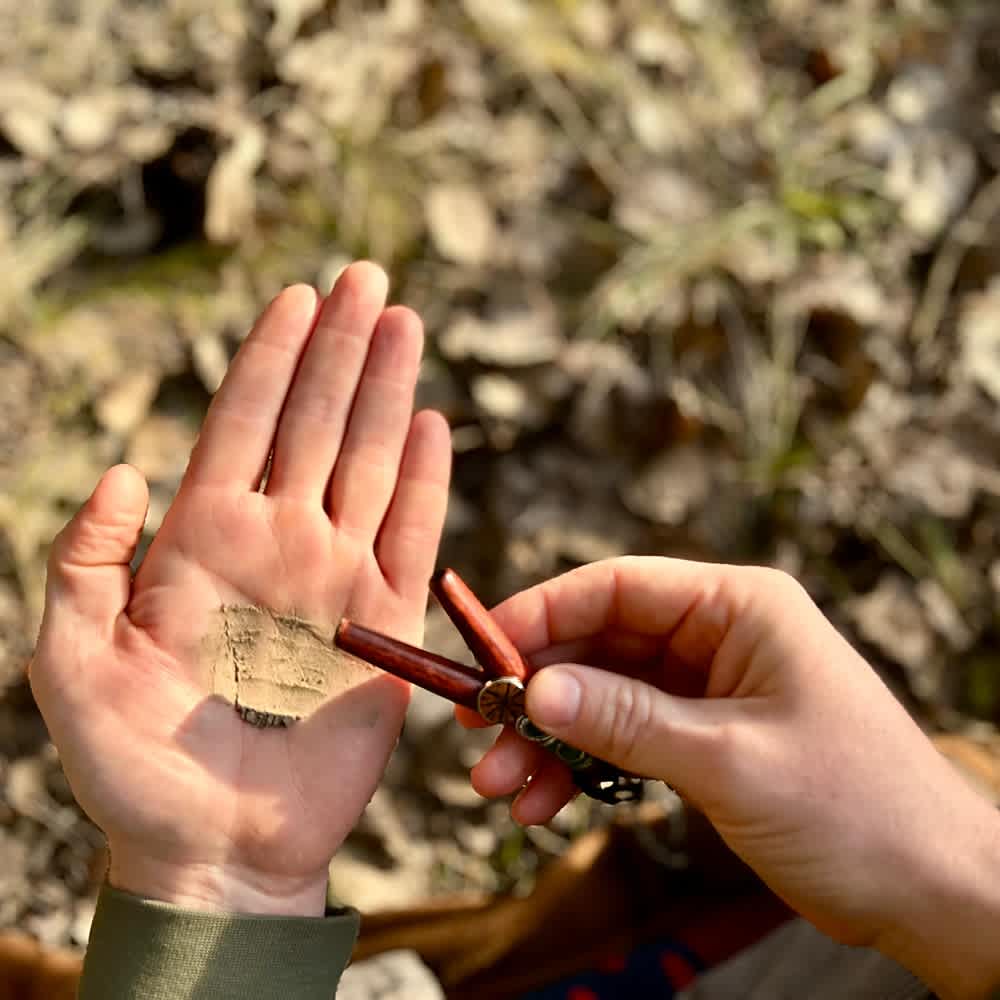
Cleansing (healing) Rapé - healing, emotional balance
The stronger, more direct family — often plain tobacco-and-ash blends. These are the ones the tradition ties to tirar a panema, "clearing the heaviness." In ceremonial use, sweating or watering eyes may follow; in Brazilian traditions that's understood as part of the cleansing rather than as a side effect. Many practitioners describe an emotional "reset" afterwards — a sigh, sometimes tears, a sense of catharsis — particularly where there's space to sit with it.
Typical blends:
Heart-opening Rapé
A gentler, more aromatic family — most associated with the Cacau blend, where roasted cacao is worked in with the tobacco and ash. Practitioners describe these as warm and softening rather than activating, and they're often chosen for quiet, introspective sittings rather than intense ceremony. The natural companion here is a Ceremonial Cacao practice — the two share the same unhurried, heart-led character, which is why people tend to pair them.
Typical blends:
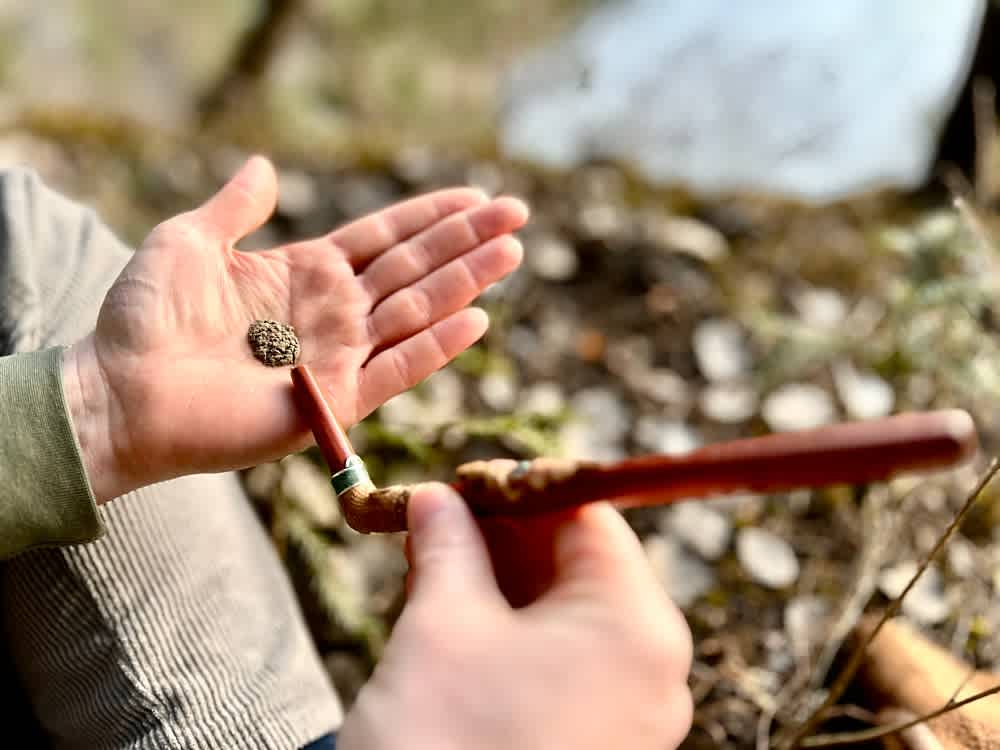
Dreamwork Rapé
A smaller, more specialised group, tied to dreaming and night practice. The blend most associated with it is Apurinã Awiry — a green snuff the Apurinã prepare entirely from a wild plant, with no tobacco and no ash. Worth flagging the technicality: by traditional standards Awiry is its own lineage and isn't classed as Rapé in the strict sense, even though it's grouped here for its dreamwork character. In the tradition these blends are spoken of as belonging to the threshold between waking and sleep — set down with intention before rest rather than reached for in daytime.
Typical blends:
Protection Rapé
In Amazonian shamanism, holding a firm energetic boundary is treated as seriously as cleansing. Where cleansing clears heaviness that's already settled, protection blends are spoken of as a shield against taking it on in the first place — useful, in the tradition, for those working in dense or draining environments. These tend to be denser, more grounding blends, often built on resilient hardwood ashes such as Cumaru (the "ironwood" of the Amazon).
Typical blends:
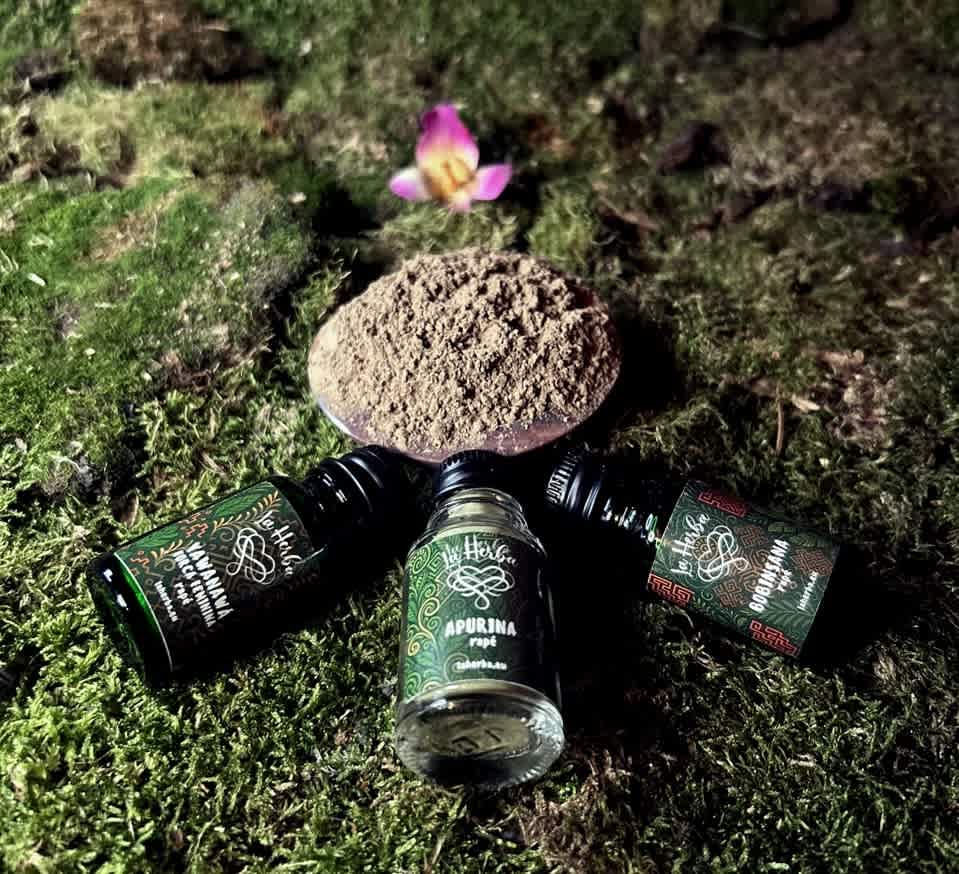
Warrior Energy Rapé
The opposite end from grounding. Where the grounding family settles and quiets, the warrior blends are the ones tribes traditionally reached for before a hunt or hard physical work — sharp, activating, made to wake the body and lift sluggish energy. These are typically strong, high-tobacco blends, and squarely experienced-practitioner territory rather than a first step.
Typical blends:
Browse all families in our Rapé collection.
Haux e muita alegria <3
The intention categories presented in this guide are our own interpretation, developed through extensive research, comparison of reputable sources, and practical experience with traditional Rapé blends. As recipes and traditions naturally vary between Indigenous tribes and artisans, these classifications are intended as helpful guidance rather than absolute or universally accepted definitions.
10 Possible Effects of Rapé
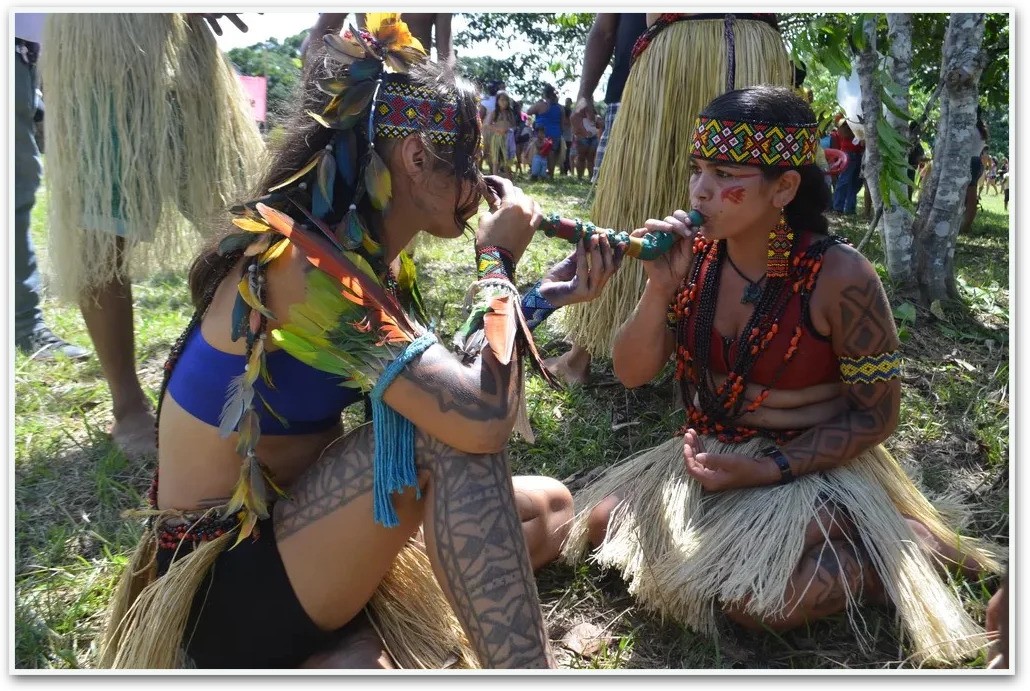
Rapé, a sacred botanical preparation rooted in indigenous traditions, is often used ceremonially as an incense or for nasal application. While it holds deep ethnographic and historical value, its u...
Katukina (Noke Koi) tribe
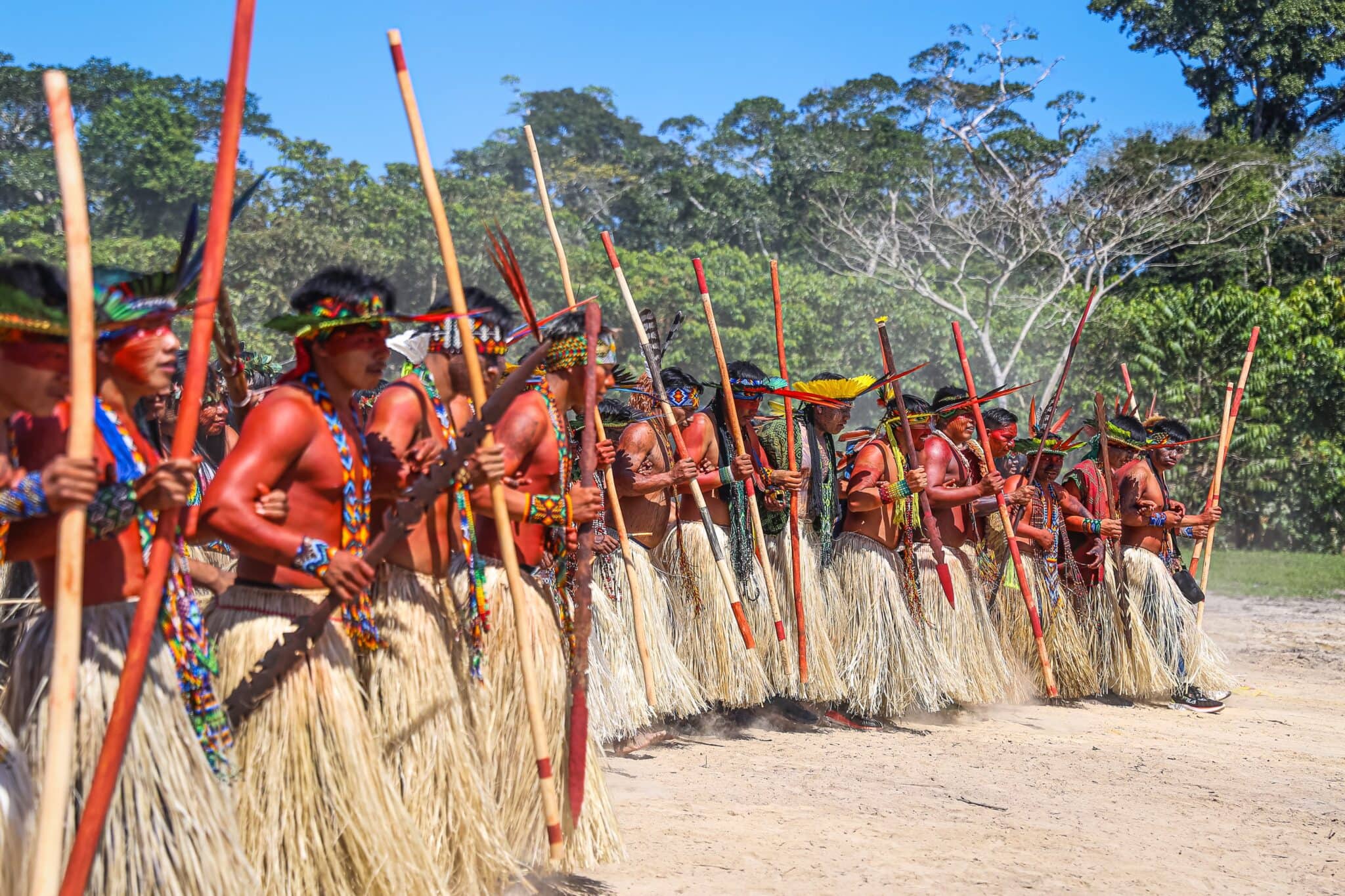
On the border of the Brazilian states of Acre and Amazonas, along the Campinas and Gregório rivers, lives an indigenous nation known to the outside world as the Katukina. They themselves never used...
Gratitude: What Happens in Your Brain and Heart When You're Thankful

Some people feel genuinely happy with a glass of clean water. Others, despite having everything they need, find something to complain about every single day. Funny how that works, isn't it?
Mos...
Shawãdawa (Arara) tribe
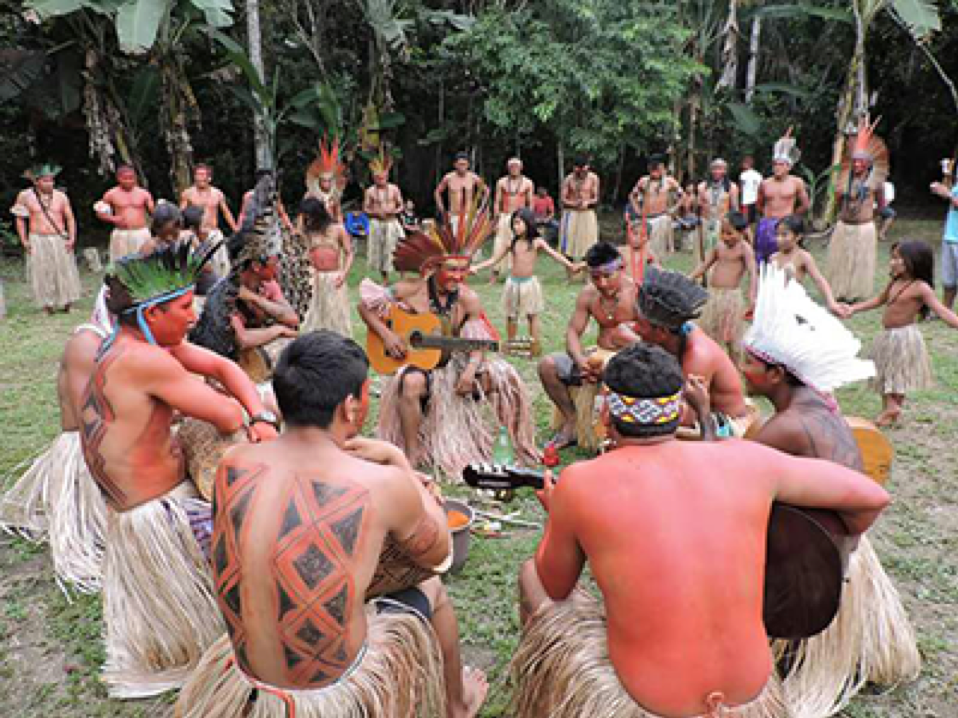
‘Shawa’ means the red parrot Ara and ‘dawa’ means family. Around 1940 the tribe was thought to have died out. In the 1970s, the government tried hard to reach out to them because a highway was bein...