
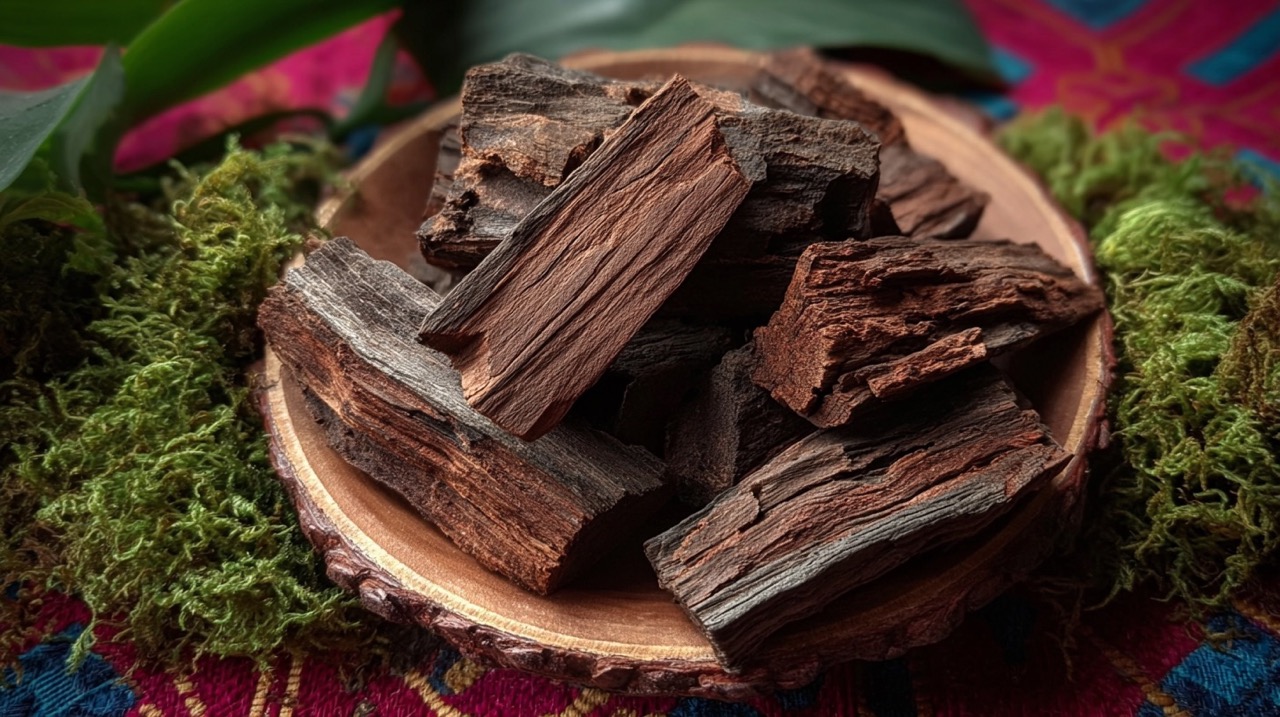
Chuchuhuasi - Amazonian tea from Peru
In Iquitos, Pucallpa or Tarapoto, bottles of dark red liquid are sold at markets and in small tin-roofed bodegas. Inside float pieces of bark steeped in aguardiente and honey. Locals simply call it chuchuhuasi.
Behind this name stands one of the best-loved trees of western Amazonia and a story that reaches far beyond the market stalls. Let us follow it – from the humid rainforest, through the dusty streets of Iquitos, to the mug on your table.
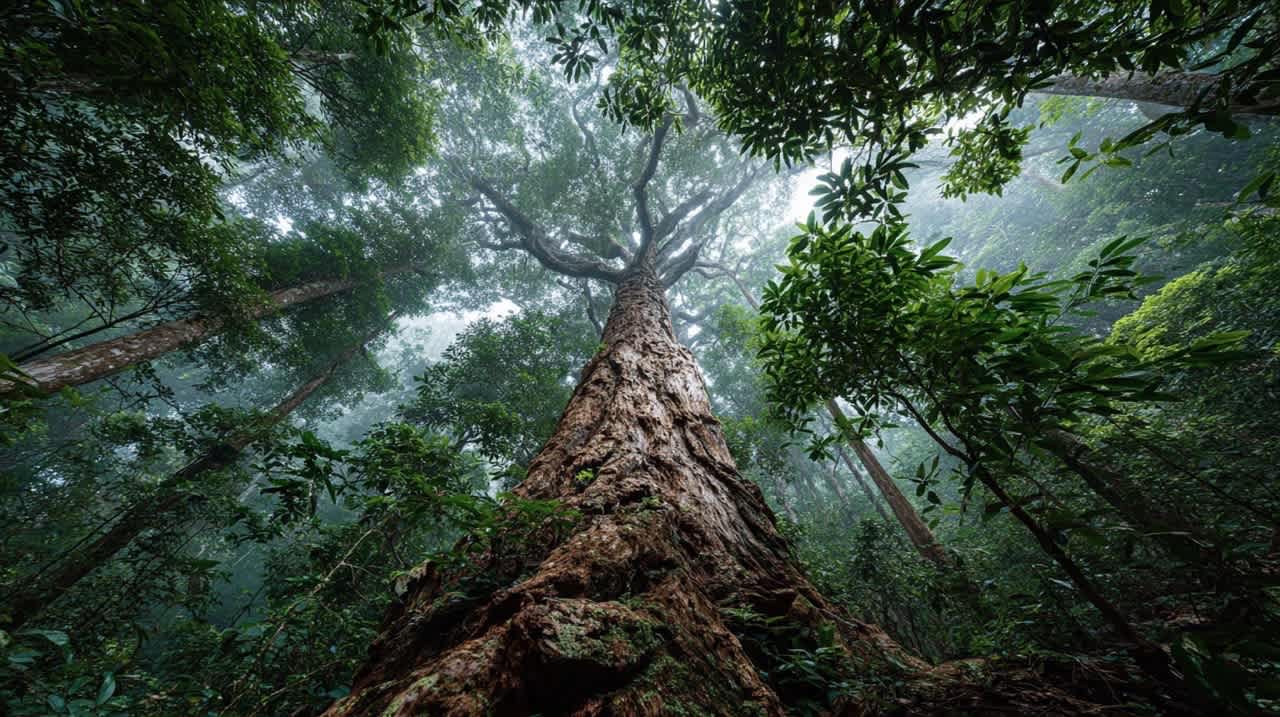
The tree with the name “shaking back”
Family
Celastraceae
Height
25 – 30 metres
Bark
Reddish and hard
Range
Peru, Bolivia, Ecuador, Colombia, Venezuela, northern Brazil
Chuchuhuasi is a mighty tree with large leaves and small white flowers. Its name is of Quechua origin and, in various forms (chuchuasi, chuchuhuasha, chuchasha), translates as “shaking back”. The Czech source Vůně z Amazonie also gives the name Chocha huasca from the Shipibo-Conibo language.
Botanists struggle a little with its exact naming. Several related species hide under the name chuchuhuasi, most often Maytenus macrocarpa, Maytenus laevis and Maytenus krukovii, and the scientific literature warns that they are often confused. For the people of the Amazon, however, it is one tree and one tradition.
Maceration from Iquitos: bark in aguardiente
The best-known form of chuchuhuasi in Peru is bark macerated in aguardiente, often with honey. A Peruvian study on the origin of the name and the tradition states that such a maceration has been mentioned since 1906. Its author even proposes recognising it as part of Peru’s cultural heritage.
A song that says more than a handbook
Chuchuhuasi has even appeared in a song by the band Los Wemblers de Iquitos, which says more about its place in popular culture than any handbook.
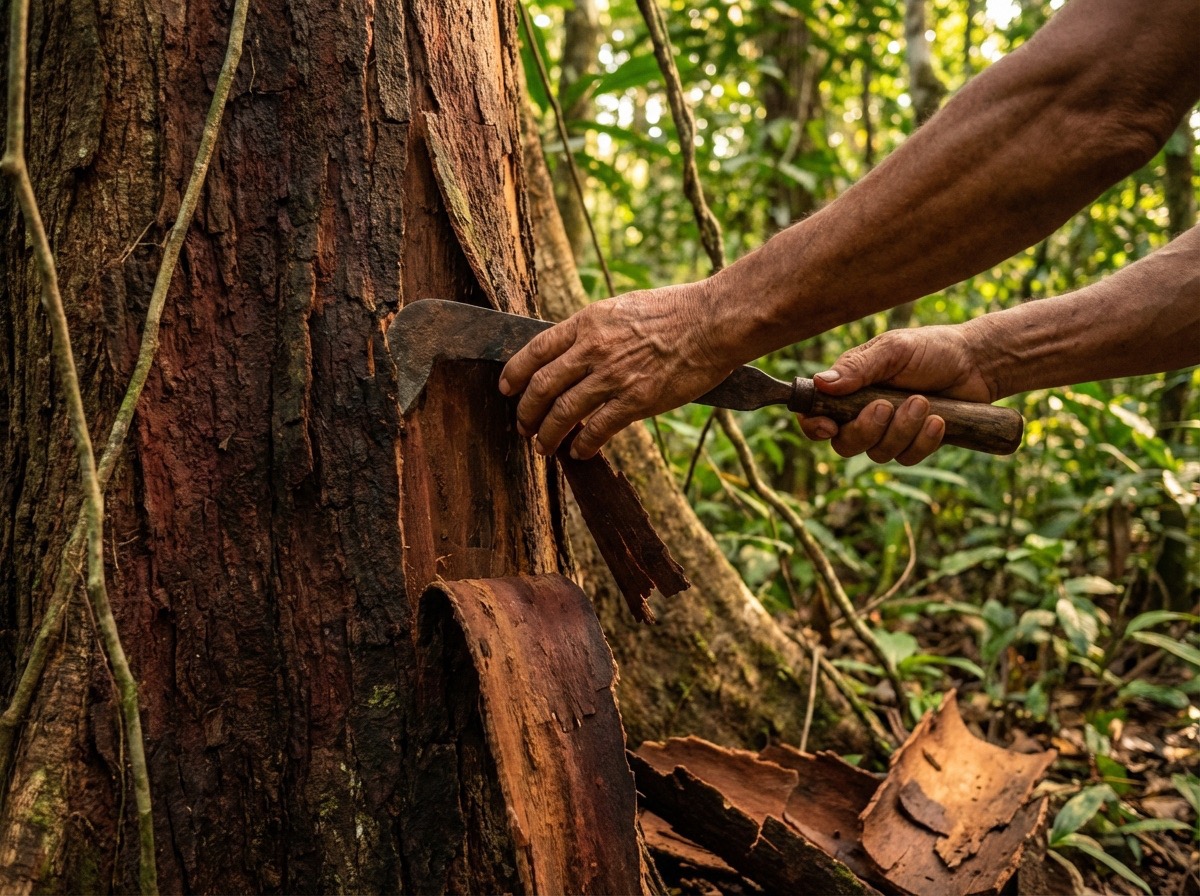
In other forms the bark is prepared as a decoction or a cold infusion in water. The bark, root and leaves are used, most often the bark, which people scrape or chop straight from the tree.
The wisdom of the communities: Bora, Uitoto and Muinane
When scientists set out to learn how the plant is used, they went to the people who know it best. A Peruvian study compared ways of using chuchuhuasi among the indigenous Bora people of the Loreto region and traditional knowledge holders from Lima. In Colombia, bark was collected for a doctoral thesis at the University of Strathclyde with the help of sabedores, knowledge holders from the Uitoto and Muinane communities who identified the tree reliably. There too the tree is traditionally prepared mainly as an alcoholic extract of root and stem bark.
The sun rises, the sun sets
A folk tale mentioned by the Czech source says that bark should be taken from the side of the trunk where the sun rises (chuchu) and from the side where it sets (huasha). Whether this is a literal etymology we do not know. But it shows how carefully trees are treated: do not take everything, and always from both sides.
Caution is part of wisdom too
A Peruvian survey among residents and traditional knowledge holders also recorded caution. Respondents said chuchuhuasi is not recommended during pregnancy, with high blood pressure or with diabetes. Indigenous wisdom is not only about what a plant “knows” but also about when to leave it alone.
What research says about chuchuhuasi
Modern science is interested in the bark, but the results are so far preliminary.
Literature review
70 papers on Maytenus laevis
The authors of the review state that the chemical composition is interesting, but traditional uses still need scientific verification. They also point to confusion in botanical identification.
Bark chemistry
University of Strathclyde, 2016
A doctoral thesis isolated a number of compounds from root bark, mainly triterpenoids (for example pristimerin and celastrol), sterols and phenolic compounds. They were studied in the laboratory on cells, not on people.
Peruvian laboratories
Iquitos
Pharmacy students tested an ethanol extract of the bark in vitro; the results were weaker than for the reference compound. Another study in mice examined the leaves (not the bark) and, alongside interesting results, recorded neurobehavioural side effects.
Independent summary
RxList
The RxList database states that evidence on safety and appropriate dosage is so far insufficient.
What does this mean?
Chuchuhuasi is a plant with an interesting chemical composition and a long tradition that science is only beginning to explore. That is why at La Herba we present it as a traditional Amazonian tea, not as a medicine.
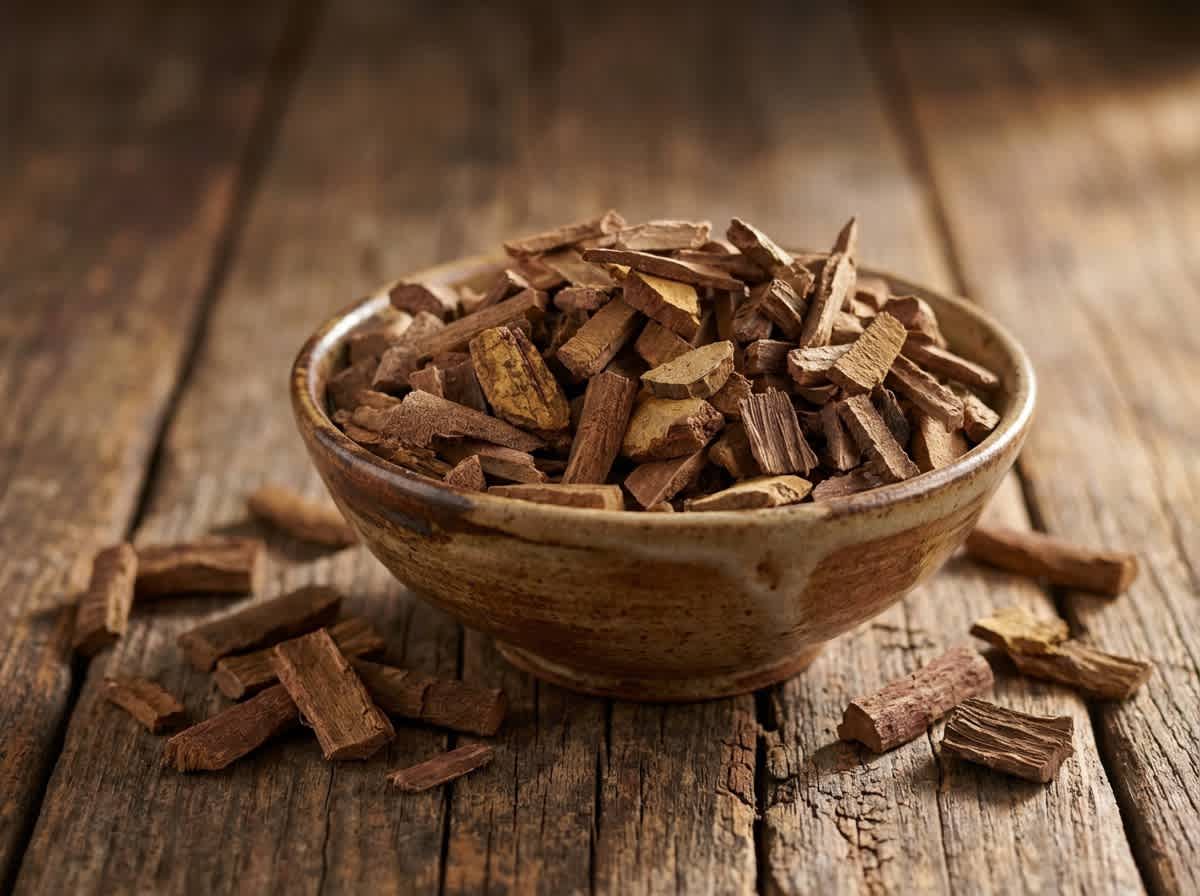
Taste and ritual: the traditional decoction
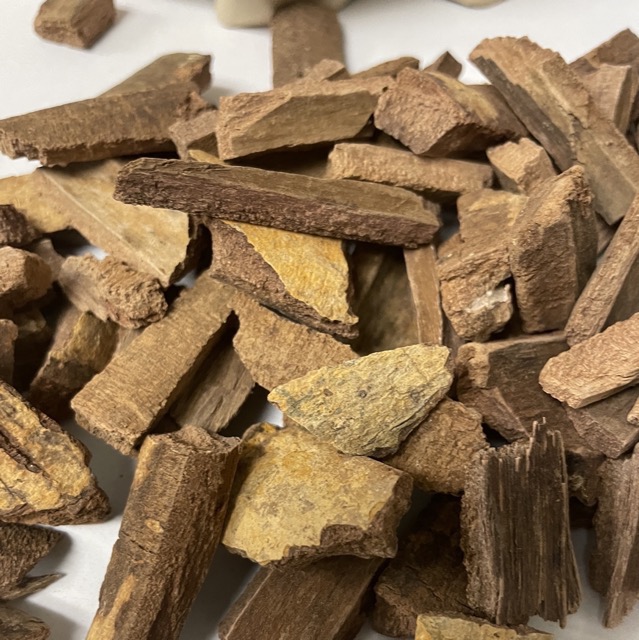
The bark is hard and woody, much like whole pieces of cinnamon. That is why it suits a decoction best. After a while the water turns deep red and the taste is sweetish, nutty, earthy and lightly spicy, with a bitter, astringent finish.
Infusion
Steeping in hot water
Pour a litre of hot water over 1 to 2 tablespoons of bark and let steep for 15 to 30 minutes.
Decoction
Slow simmering
For a fuller taste the bark is simmered over low heat for 30 to 60 minutes.
Straining
Served warm
The liquid is strained and served warm. Honey, cinnamon or ginger can soften the bitterness.
The bark can be used a second time; the second decoction will be milder. Store it in a dry, dark place.
According to tradition, bark is prepared slowly, not “all at once”. The decoction deserves a moment of calm: the smell of wood in the kitchen, the darkening water, the first sip. The tea contains no caffeine.
Notice
The tea is not suitable for children, pregnant and breastfeeding women. If you have health problems or take medication, consult a doctor. Herbal tea is not a medicine or a substitute for medical care.

Chuchuhuasi at La Herba
Chuchuhuasi – Amazonian tea
Whole unprocessed pieces of bark from Peru, 100% bark with no additives. Woody aroma, sweetish nutty taste, deep red infusion. View in the shop
Pairs well with chuchuhuasi
Frequently asked questions
What is chuchuhuasi? +
A tree of the Celastraceae family from the Amazon whose bark is traditionally prepared as a decoction, infusion or maceration in aguardiente.
What does the name chuchuhuasi mean? +
The name is of Quechua origin and translates as “shaking back”.
Which tree species does the bark come from? +
Several related species hide under the name chuchuhuasi, most often Maytenus macrocarpa, Maytenus laevis and Maytenus krukovii.
How does the decoction taste? +
Sweetish, nutty, earthy and lightly spicy, with a bitter, astringent finish. The infusion is deep red.
Who should avoid it? +
The tea is not suitable for children, pregnant and breastfeeding women. If you have health problems or take medication, consult a doctor.
In closing
Chuchuhuasi is not a fashionable novelty. It is a tree that people in the Amazon have known longer than records exist, and that was named after its own story. If it tempts you, take your time: simmer the decoction slowly, taste that sweetish, earthy flavour and remember where the bark came from.
Do you have your own way of preparing it? Share it with us in the comments or on our social networks.
Sources: Vůně z Amazonie · University of Strathclyde, thesis 2016 · Maytenus laevis review, Ethnobotany Research & Applications · Peruvian survey of use, Dialnet · Study on the origin of the name, Amazonía Peruana · UNAP Iquitos, in vitro study · Pharmacognosy Journal, mouse study · Wikipedia, Maytenus macrocarpa · RxList
Disclaimer
All information is provided solely for educational, scientific, ethnographic and historical purposes. This article does not replace the advice of a doctor or other professional. Herbal tea is not a medicine or a substitute for medical care. If you have health problems or take medication, consult a doctor. More in our Disclaimer.
Chuchuhuasi - Amazonian tea from Peru
In Iquitos, Pucallpa or Tarapoto, bottles of dark red liquid are sold at markets and in small tin-roofed bodegas. Inside float pieces of bark steeped in aguardiente and honey. Locals simply cal...
Puyanawa tribe
Indigenous peoples of the Amazon
According to the elders, their ancestors were born as tiny frogs in the rotting leaf of a palm. The Puyanawa survived rubber captivity, nearly lost their langu...
The Root Chakra (Muladhara): Your Key to Stability and Security
Root chakra · Muladhara
Do you often feel tired, anxious, or like your head is in the clouds, unable to focus? It might be time to tend to your foundations.
Your Root Chakra is the pillar upo...
Yawanawa Tribe

Indigenous peoples of the Amazon
“We are like the peccaries – always together.” This is how the Yawanawá describe their identity – a people from the banks of the Gregório river in Acre, Brazil...